Dinosaur 24 Oz Venti Cup Wrap: Embroidery Designer Review
When I first opened the digital folder for this Dinosaur, 24 Oz Venti Cup Wrap, I felt an immediate spark of recognition. It’s the kind of playful, character-driven artwork that practically begs to be stitched onto a toddler’s sweatshirt or a reusable tote bag. The graphic isn’t an embroidery file yet—it’s a collection of vector and raster assets—but that’s exactly how I prefer to work. I’d rather build my own digitized version from a clean, high-contrast source than inherit someone else’s stitch settings. As a designer who regularly creates machine embroidery design files for small shops, I look for artwork that can survive the translation from screen to thread without losing its soul. This dinosaur wrap design has promise, and I’ll walk through exactly how I’d evaluate it for real projects.
First Glance: Shape, Mood, and Visual Personality
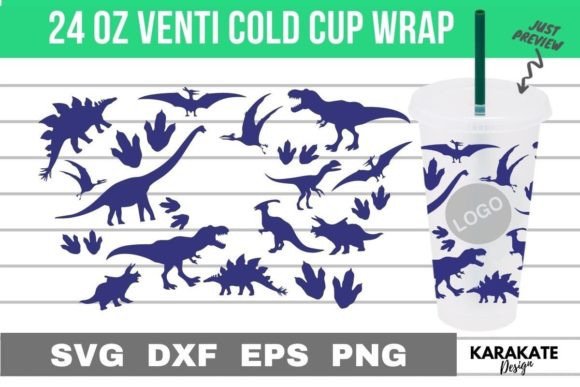
The design centers on a cheerful dinosaur motif, clearly intended to wrap around a 24-ounce venti cup. But the moment I saw it, my mind went to flat surfaces—a canvas tote, a quilt block, the back of a denim jacket. The layout is well-balanced, with the dinosaur figure occupying enough space to feel substantial without crowding the edges. The theme is undeniably playful, leaning toward a soft, kid-friendly illustration with rounded shapes and a friendly expression. That mood matters a lot when you’re picking a digital embroidery file for a shop that sells handmade baby gifts or nursery decor.
There’s a nice sense of movement in the tail and the posture, which keeps the design from feeling static. The detail level is moderate—not overly intricate, but not so basic that it looks like a rough sketch. For embroidery, that’s a sweet spot. Too many tiny floating elements, and you’ll fight with trims and jump stitches. Too few, and the finished piece looks flat. This Dinosaur, 24 Oz Venti Cup Wrap strikes a balance that would suit a satin stitch outline with fill stitch sections, or even a partial applique design if you want to speed up production and add texture.
Real Scenario: Turning a Cup Wrap into a Tote Bag Staple
Last month, a client asked me to create a line of embroidered tote bags for a children’s bookshop. The brief was simple: friendly animals, bright colors, and a design that could be recognized from across a room. The moment I saw this dinosaur graphic, I imagined it stitched in a vivid lime green thread on a natural cotton tote, with the spine plates picked out in contrasting teal. The way the dinosaur’s body curves naturally would follow the shape of a tote bag beautifully, almost like it was made for that instead of a cup.
I’d convert the PNG file into a digitized embroidery file, using the transparent background to isolate the main subject without any fuss. Since the provided PNG is 300 DPI, I can zoom in and examine every edge for clean digitizing. The SVG file, which is already sized, gives me a crisp vector outline to trace. I’ll often bring the EPS into my digitizing software as a reference layer, then build the stitch types by hand. For a tote bag, a running stitch for the fine details and a fill stitch for the body would work, with some satin stitch accents on the eyes and claws to make them pop. The result would be a sturdy, washable design that holds up to daily use—exactly what a bookshop tote needs.
Embroidery Performance: Thread, Fabric, and Texture
Not every graphic translates well into thread, and the Dinosaur, 24 Oz Venti Cup Wrap is no exception. I’d be cautious about using it on highly textured fabrics like a thick terry cloth towel or a loose-weave linen. The dinosaur’s smooth curves could become jagged if the fabric shifts or if the stabilizer isn’t adequate. I’d recommend a medium-weight cutaway stabilizer for most flat projects, and a water-soluble topping if the fabric has a nap. For a sweatshirt embroidery project, I’d test the design on a scrap of fleece first, because the softness of the fabric can swallow small details like the toes or the eye highlights.
Thread color choice will make or break the perceived clarity. I’d lean toward a palette with strong contrast—a dark outline thread around the body helps the dinosaur stand out on pastel backgrounds, especially if you’re stitching on a baby embroidery item like a onesie or a bib. On dark fabrics, you’ll need to be careful with the fill. A bright yellow dinosaur on a navy sweatshirt reads well, but olive green on black might muddle the details. I’d test a black and white mockup before committing to colors, just to see if the tonal values hold up without the outline.
Hoop Size, Digitizing, and Small Details
Since the product description says the SVG file is already sized, I’ll assume the dimensions are appropriate for a 24-ounce cup wrap—probably around 4 to 5 inches tall and maybe 10 inches long when curved. For flat embroidery, I’d check the width carefully. If the design is over 8 inches wide, you’ll need a large hoop or a multi-hooping setup, which adds complexity for a home crafter. For a custom apparel piece like a hoodie, I’d probably reduce the size slightly to fit a standard 5x7 hoop, as long as the details don’t become too tiny. The dinosaur’s face needs to remain legible; if the eye shrinks below 2mm, it’ll turn into a blob of thread.
Digitizing the design also means deciding on stitch density. I’d keep the fill density moderate—around 0.4mm spacing—to avoid a stiff, cardboard-like feel on a personalized gift like a baby blanket. The tail and spine plates could be done in a lighter density to add a sense of dimension. If I were making an embroidered patch, I’d add a merrowed edge or a satin border, but that’s a separate finishing step. The graphic itself doesn’t include a patch border, so I’d have to add one during digitizing.
Where This Design Shines Commercially
For an Etsy seller or a small shop product lineup, this dinosaur graphic is a versatile asset. Could be a cover image for a printable mockup or a digital product preview, but I’m more interested in its physical embroidery potential. I can see it on a set of kitchen towels for a dinosaur-themed birthday party, or as a matching pillow cover design for a child’s room. The wrap format might even inspire a cap design—though curved surfaces like caps need careful reshaping, and I’d probably simplify the tail to prevent distortion on a structured hat.
One thing I always check before using a graphics file for commercial embroidery is the licensing. The product description doesn’t mention a license, so I’d contact the seller to confirm that physical finished products can be sold. Many crafts designers are fine with small-batch use, but it’s not a given. I’d hate to stitch a dozen toddler aprons for a craft fair only to find out I can’t sell them. I’d also check if the files can be used to create digital embroidery files for resale—that’s a different license usually, and I wouldn’t assume it’s included.
Applying the Design to Different Products
Let’s run through a few concrete product ideas where this Dinosaur, 24 Oz Venti Cup Wrap would perform well, and where it might struggle.
- Tote bags: Excellent. The flat surface and sturdy weave are forgiving. I’d use a medium-weight cutaway stabilizer and a soft cotton thread.
- Sweatshirts: Good, but test on fleece first. The design needs a slightly open fill to avoid puckering, and a water-soluble topper for the nap.
- Baby onesies: Very good. The theme is perfect, and the design can be scaled down to fit a 4x4 hoop. I’d use a soft, low-density fill so the fabric remains stretchy.
- Aprons: Good, especially on a solid canvas apron. The dinosaur’s shape is bold enough to be seen from a distance, which is great for a boutique baking set.
- Caps: Tricky. The long, horizontal layout would need to be curved around the cap panel, and the tail might get lost. I’d split the design into a front-facing dinosaur head and a smaller tail on the side, or just use the head alone.
- Patches: Excellent. The design can be heavily outlined and made into a sew-on patch. I’d add a felt backing and a zigzag edge.
- Tea towels: Good, but keep the stitching light. A dense design on a thin towel looks messy after washing. I’d use a tear-away stabilizer and a single-color outline version.
- Nursery decor: Perfect. A framed embroidery hoop art with this dinosaur would sell quickly. I’d use a soft linen fabric and a muted color palette for a modern look.
Practical Tips for Digitizing This Graphic
If you’re a creative entrepreneur who’s going to digitize this design yourself, here are my field notes.
First, open the PNG and study the edges. The 300 DPI resolution is enough to see where the colors meet. If the dinosaur has a black outline in the PNG, consider whether you want to trace that as a satin stitch or replace it with a wider column of stitching. I often prefer to digitize the outline as a separate element so I can control its thickness. The SVG file will give you exact paths, which is a huge time-saver.
Second, plan your stitch types. The body can be a fill stitch with a slight angle change to suggest texture. The spots on the dinosaur’s back—if there are any—could be separate applique design pieces, which would add a dimensional pop without adding too many stitches. I’d use a running stitch for the smallest details, like the smile or the toes, and watch the stitch length to keep it from breaking.
Third, test on scrap fabric. I can’t stress this enough. Stitch the design on a piece of medium-weight cotton with the stabilizer you plan to use, and then pull it, stretch it, and wash it once. See if any threads shift or if the design puckers. Adjust the density or pull compensation as needed. I’d also test it on a dark fabric with a light thread to see if the background shows through the fill.
Finally, consider the end use. If you’re making a holiday gift or a personalized product, the customer expects a professional finish. The dinosaur’s expression should be clear and friendly, not distorted. I’d stitch a sample and show it to a few people—if they instantly smile, you’ve got a winner.
What This Graphic Means for a Craft Business
From a small business perspective, the Dinosaur, 24 Oz Venti Cup Wrap is a good investment if you’re looking to add a reliable, cute character to your embroidery lineup. The dinosaur theme has staying power—it’s not a trend that will vanish next season. Parents and gift buyers are always looking for handmade products with a personal touch, and a well-stitched dinosaur on a blanket or a tote bag fits that need perfectly.
I’d use this design to create a cohesive collection: a matching bib, a burp cloth, a small security blanket, and a tote for the mom. The giftability factor goes up when the items coordinate. For Etsy listings, I’d photograph the finished embroidery on a neutral background, with a close-up of the stitch texture. The buyer engagement increases when they can see the thread quality, not just a mockup.
One caution: because this is a graphics file, not an embroidery file, the final product quality depends entirely on your digitizing skill. If you’re new to machine embroidery, it might be worth paying a professional digitizer to convert it, at least until you’re confident. The last thing you want is a poorly digitized design that frustrates customers and hurts your shop’s reputation.
In the end, this Dinosaur, 24 Oz Venti Cup Wrap is a solid, versatile design asset that I’d happily add to my digital library. It’s charming without being overly complicated, and it leaves room for creative interpretation. Whether you’re stitching up a storm for a craft fair or preparing a custom apparel order, it’s a graphic that can earn its keep. Just remember to test, check your licensing, and always let the thread do the talking.