Banana 24 Oz Venti Cup Wrap — A Designer’s Honest Review
Some designs land in your inbox and immediately spark a very specific project idea. That happened when I first opened the Banana, 24 Oz Venti Cup Wrap. It is not a generic fruit illustration. The way the banana curves, the proportions scaled for a venti cup, and the playful personality of the graphic all point toward something meant for real products, not just a digital folder that collects dust. I have been stitching and reviewing embroidery-ready artwork for years, and this one made me mentally queue up a batch of custom tote bags before I even finished my coffee.
The files arrive as a clean set: SVG, DXF, EPS, and a 300 DPI PNG with a transparent background. Right away, that tells me the designer understands how crafters and small business owners actually work. You get the vector formats for resizing and digitizing without losing quality, plus a high-resolution raster file for mockups, printables, and quick previews. This is a Graphics product in the Crafts category, so you will need to digitize it for machine embroidery. That is an important step, and I will talk about what that means for your workflow later in this review.
First Look at the Cup Wrap Design
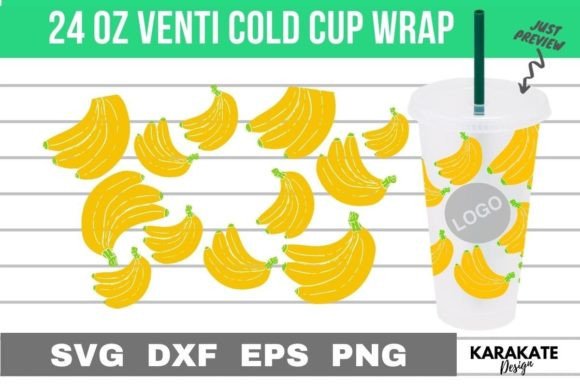
The banana illustration has a light, almost whimsical personality without tipping into cartoonish territory. It feels modern, a little bit cheeky, and very recognizable. The shape is elongated and slightly curved, which naturally follows the contour of a 24 oz venti cup. That is a thoughtful detail. Too many cup wrap designs ignore the actual cylindrical surface they are meant to decorate, but this one clearly started with the product in mind.
What I appreciate most is the restraint in the linework. There are not dozens of tiny floating elements, no overly complex shading that would turn into a thread-painting nightmare. The shapes are defined enough to hold their own as a standalone motif, yet open enough that you could add text, a name, or a small accent without overcrowding the design. In embroidery terms, that balance between detail and simplicity matters enormously.
Where This Design Actually Belongs
When I evaluate any machine embroidery design or design asset meant for stitching, I ask one question: what finished product does this naturally belong on? The answer for the Banana, 24 Oz Venti Cup Wrap came quickly. This belongs on a sturdy canvas tote bag, the kind someone carries to a farmers market or a weekend coffee run. It also belongs on a relaxed-fit sweatshirt, the kind you throw on for Sunday morning errands.
I could also see this working beautifully on a kitchen towel set, a simple apron, or even a patch sewn onto a denim jacket. The banana theme is universal enough to appeal to a broad audience, from fruit-loving kids to adults who appreciate a subtle, quirky detail. For Etsy sellers and small shop product creators, designs with this kind of broad appeal tend to perform well because they do not box you into a hyper-niche audience.
Real Project Scenario: The Coffee Lover’s Tote
Let me walk you through a practical scenario. A client wants a personalized gift for a friend who is obsessed with banana bread and cold brew. You take the Banana, 24 Oz Venti Cup Wrap artwork, digitize it with a clean satin stitch outline and a light fill stitch for the banana body, and stitch it onto a natural cotton tote. You add the friend’s name in a small, simple font just beneath the banana. The result is a custom product that feels boutique-quality, not like a mass-produced print. That is the kind of project where this design shines.
In my experience, customers react strongly to designs that feel personal and a little unexpected. A banana for a coffee cup wrap is not the first thing people search for, but once they see it on a finished product, it clicks. It becomes a conversation starter. That is the kind of customer engagement that builds repeat buyers and word-of-mouth traffic for a small craft business.
Translating Graphics to Embroidery
Since this is a digital embroidery file asset in its raw graphic form, you will need to digitize the SVG or EPS file before stitching. The good news is that the clean vector lines make the digitizing process straightforward. The transparent background PNG also helps you quickly mock up the design on different fabric backgrounds before committing thread to fabric. I always recommend testing a black-and-white version of any design to see how it reads without color. This banana image holds its silhouette well, which means it will still be recognizable even in a single-color stitch on a dark fabric.
When you digitize, pay attention to the stitch density inside the banana shape. Too dense, and you risk puckering on lighter fabrics. Too sparse, and the fill looks uneven. A medium-density fill stitch with a slightly wider satin stitch border gives the design a professional, polished edge. For the curved sections, check your stitch angles. The natural curve of the banana benefits from stitch direction that follows the fruit’s contour rather than running against it.
Fabric and Hoop Considerations
This design does not demand a massive hoop, but it does need enough space for the elongated shape to breathe. If you are stitching on a sweatshirt or a tote bag, a 4x4 hoop might feel tight, especially if you plan to add text. A 5x7 or larger hoop gives you comfortable margins. For caps and hats, the curved surface presents a challenge. The long banana shape could distort on a highly curved cap front unless you adjust the digitizing for that specific profile. I would test it on a flat surface first, then adapt for caps if needed.
Fabrics with texture, like terry cloth or thick waffle weave, can swallow fine details. If you plan to stitch this on a kitchen towel or a textured blanket, consider simplifying the design slightly and using a bolder stitch definition. On the other hand, smooth cotton, canvas, and medium-weight linen give you a crisp, clean result that shows off every stitch. Stretchy fabrics like jersey need a good cut-away stabilizer to prevent shifting during stitching. I always test a new design on scrap fabric from the same batch before committing to the final product.
Thread Colors and Visual Impact
The banana theme naturally leans toward warm yellows, soft creams, and maybe a touch of brown or green for the stem. But do not feel limited to realistic colors. I have seen a monochrome white banana on a charcoal sweatshirt look incredibly chic. A pastel pink banana on a baby onesie becomes an adorable baby embroidery piece. A metallic gold thread version on a dark apron would read as subtly elegant. The design is simple enough to let your thread color choices do the heavy lifting for mood and branding.
For handmade product sellers, color consistency across a product line builds brand trust. If you are stitching this banana design across multiple items, keep your thread palette consistent. The same shade of yellow on a tote, a sweatshirt, and a pillow cover creates a cohesive collection that photographs well and feels intentional.
Where to Be Cautious
I want to be straightforward about the limits of this design. The elongated shape means it is not ideal for very small applications like a zipper pull tag or a tiny pocket corner. Anything under three inches wide might lose the recognizable banana silhouette. Also, if you are stitching on dark fabric, test your thread color visibility. A pale yellow on black can look stunning, but a medium yellow on navy might get muddy. Always do a quick stitch-out on the actual fabric before running a full batch.
Another practical note: the design is optimized for a 24 oz venti cup, so if you are scaling it for a different cup size or a completely different product, keep the proportions intact. Stretching the banana wider or squishing it shorter can ruin the visual balance. The vector files make clean scaling possible, but always lock the aspect ratio.
Commercial Use and Licensing
Before you list finished products on Etsy or sell at a craft fair, confirm the licensing terms that come with the files. The product description mentions four file formats, but it does not detail commercial usage rights. Most graphics sold in the Crafts category allow personal and small commercial use, but you must verify this before applying the design to items you intend to sell. Respecting the designer’s terms protects your business and supports the creative community.
Who This Design Is For
If you are a creative entrepreneur who loves quirky, food-themed designs, this banana cup wrap is a strong addition to your asset library. It works for personalized gift projects, custom apparel, tote bags, kitchen textiles, and seasonal items like summer market merchandise. The design is not overly complicated, so it digitizes efficiently and stitches out relatively quickly. That matters when you are producing items in batches for a busy shop.
For hobbyists and makers, this is a fun weekend project that yields a finished product you will actually use or gift with pride. There is something satisfying about stitching a design that feels both playful and polished. The banana motif is timeless, not trendy, so items you make today will still look relevant years from now.
Final Practical Notes
Before you start stitching, take these steps. First, open the SVG file in your digitizing software and check the path complexity. Clean up any unnecessary nodes. Second, print the PNG at actual size on paper and place it on your intended product. This low-tech preview reveals proportion issues that a screen cannot. Third, stitch a test sample on the exact fabric you will use, with the stabilizer you plan to use, and wash it once. See how the stitches hold up. This is the only way to confidently offer a finished product to a paying customer.
The Banana, 24 Oz Venti Cup Wrap earns its place in a working designer’s digital library. It is not trying to do too much. It knows exactly what it is: a cheerful, well-proportioned graphic that translates beautifully into stitched products. With thoughtful digitizing and smart fabric choices, this design can become a reliable seller or a beloved handmade gift. That is exactly the kind of design asset I keep coming back to.